


How Our Technicians Spot Hidden Burner Wear During Routine Fall Inspections
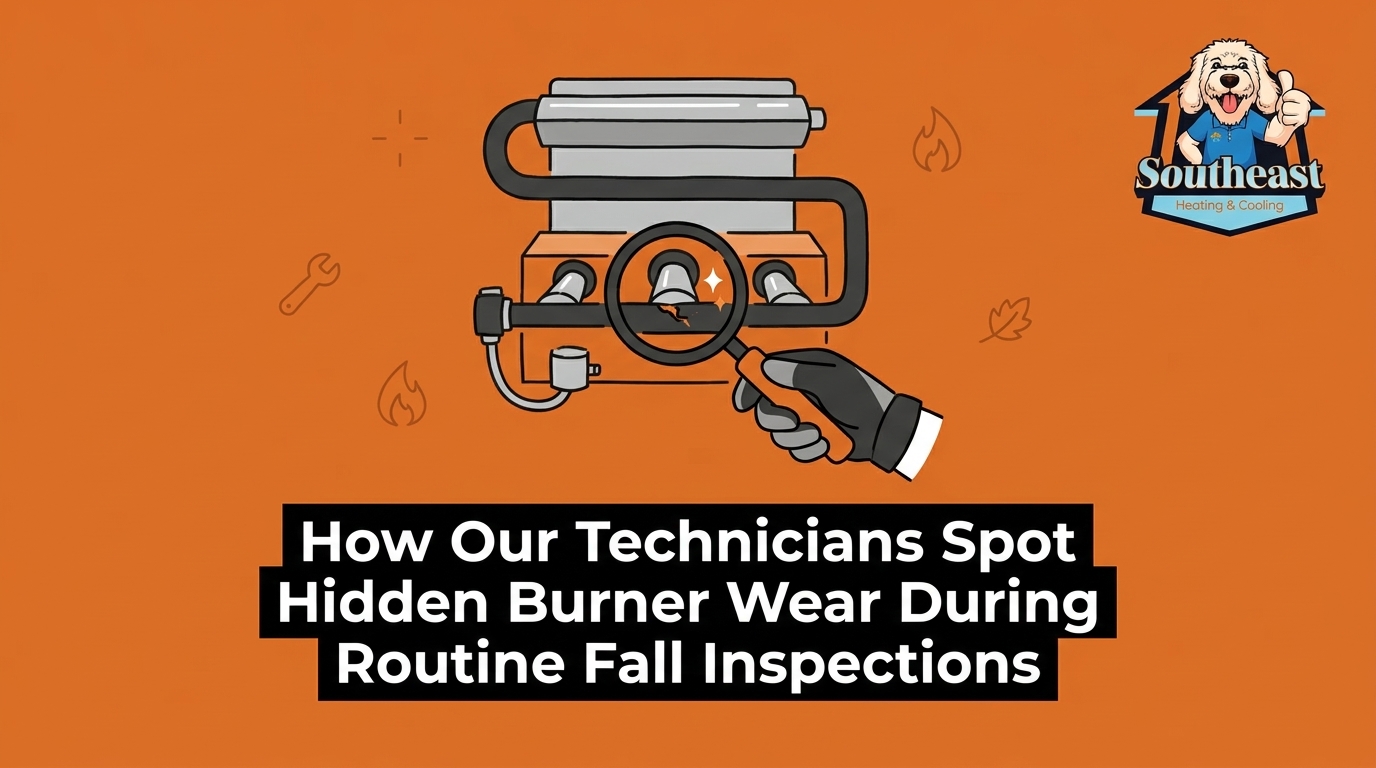
The Silent Threat to Your Furnace After a Humid Summer
If you want to know exactly how our technicians spot hidden burner wear during routine fall inspections, the answer starts with a problem you probably aren't even thinking about yet. Your air conditioner might be running perfectly right now, but hidden deep inside your furnace, a quiet issue is brewing. Idle heating systems accumulate a surprising amount of moisture during sticky, high-humidity summer months. In our experience at Southeast Heating & Cooling, this is especially true for equipment installed in unconditioned spaces—a setup our team encounters constantly in many Buford GA area homes. When hot, humid air circulates around the cold metal components of an inactive furnace in your basement or attic, condensation forms.
Over the span of several months, this lingering moisture leads to microscopic rust and corrosion on sensitive burner components. Because the furnace is switched off, this deterioration happens completely out of sight. Most homeowners only discover the damage when they try to turn on the heat for the very first time and the system fails to ignite. This leaves you with a critical decision point: waiting for an unexpected breakdown during a late-fall cold snap, or scheduling a proactive inspection before the weather turns.
Taking action early makes all the difference. Comprehensive heating services address these hidden dangers long before they escalate into expensive repairs or safety hazards. By enrolling in a routine maintenance plan, you ensure a professional evaluates your burner assembly while the weather is still mild. Our technicians know exactly where summer humidity leaves its mark, allowing us to neutralize the threat before your family actually needs the heat.
What Happens Inside Your Furnace During the Off-Season
The Problem: When your furnace sits idle for five to six months, it becomes a magnet for environmental wear. The internal environment of an unconditioned attic or basement fluctuates wildly during the summer. As temperatures rise and fall, condensation repeatedly coats the metal parts of your furnace. At the same time, household dust, pet dander, and airborne lint settle inside the cabinet.
The Cause: This combination of moisture and debris creates a stubborn, cement-like buildup on your burner ports. The science behind this is straightforward but destructive. Dust particles absorb the condensation, holding moisture directly against the steel or aluminized components of the burner. This accelerates the oxidation process. Because the system is not actively burning gas to dry itself out, the rust continues to spread undisturbed throughout the summer.
The Solution: These issues remain completely invisible from the outside of the cabinet. You cannot simply look at your furnace and know if the burners are corroded. It requires professional intervention to safely open the combustion chamber, access the burner assembly, and evaluate the extent of the off-season wear. Scheduling this service during the September pre-heating season is the most effective way to catch the buildup. A trained technician will carefully remove the debris and assess the metal for pitting or structural weakness before the system is ever asked to ignite.
• Months 1-2 (Spring/Early Summer) — What Happens Inside the Furnace: System powers down. Ambient dust begins to settle inside the cabinet. — Impact on Burner Components: A thin layer of airborne debris coats the burner ports and igniter.
• Months 3-4 (Peak Summer) — What Happens Inside the Furnace: High humidity causes condensation to form on cold metal surfaces. — Impact on Burner Components: Moisture mixes with the dust layer, trapping water against the metal and starting surface oxidation.
• Months 5-6 (Late Summer/Early Fall) — What Happens Inside the Furnace: Repeated temperature swings bake the damp dust into a hard crust. — Impact on Burner Components: Microscopic rust begins eating into the burner ports, threatening to disrupt gas flow.
Microscopic Rust and Early Corrosion Detection
Catching rust early is the primary goal of a fall tune-up. When our Southeast Heating & Cooling technicians arrive at Buford GA area homes for an inspection, we perform a highly meticulous visual and physical evaluation of the entire burner assembly and heat exchanger. We've seen firsthand how the difference between harmless surface discoloration and structural rust is subtle, but it dictates whether your furnace is safe to operate.
Here is exactly how our technicians approach early corrosion detection:
1. Isolating the gas and power: Safety always comes first. The technician shuts off the gas supply and disconnects the electrical power to ensure the combustion chamber is completely safe to handle.
2. Extracting the burner assembly: Depending on the model, the technician carefully removes the burners to inspect them under proper lighting. This allows them to see the underside and the crossover channels where rust often hides.
3. Evaluating the rust type: They check for pitting, flaking, or scaling. Light surface oxidation can often be cleaned, but deep, structural rust that thins the metal means the burner must be replaced.
4. Precision cleaning: Using specialized wire brushes and compressed air, the technician safely removes minor corrosion and stubborn dust without altering the size or shape of the sensitive gas orifices.
5. Reinstallation and testing: The burners are carefully reseated, and the system is test-fired to ensure the gas flows smoothly and ignites instantly.
This level of detail is why burner maintenance is never a do-it-yourself task. The precision required to clean these components without damaging them is immense, and any mistake carries the severe risk of a gas leak or carbon monoxide exposure.
The Danger of Clogged Burner Ports
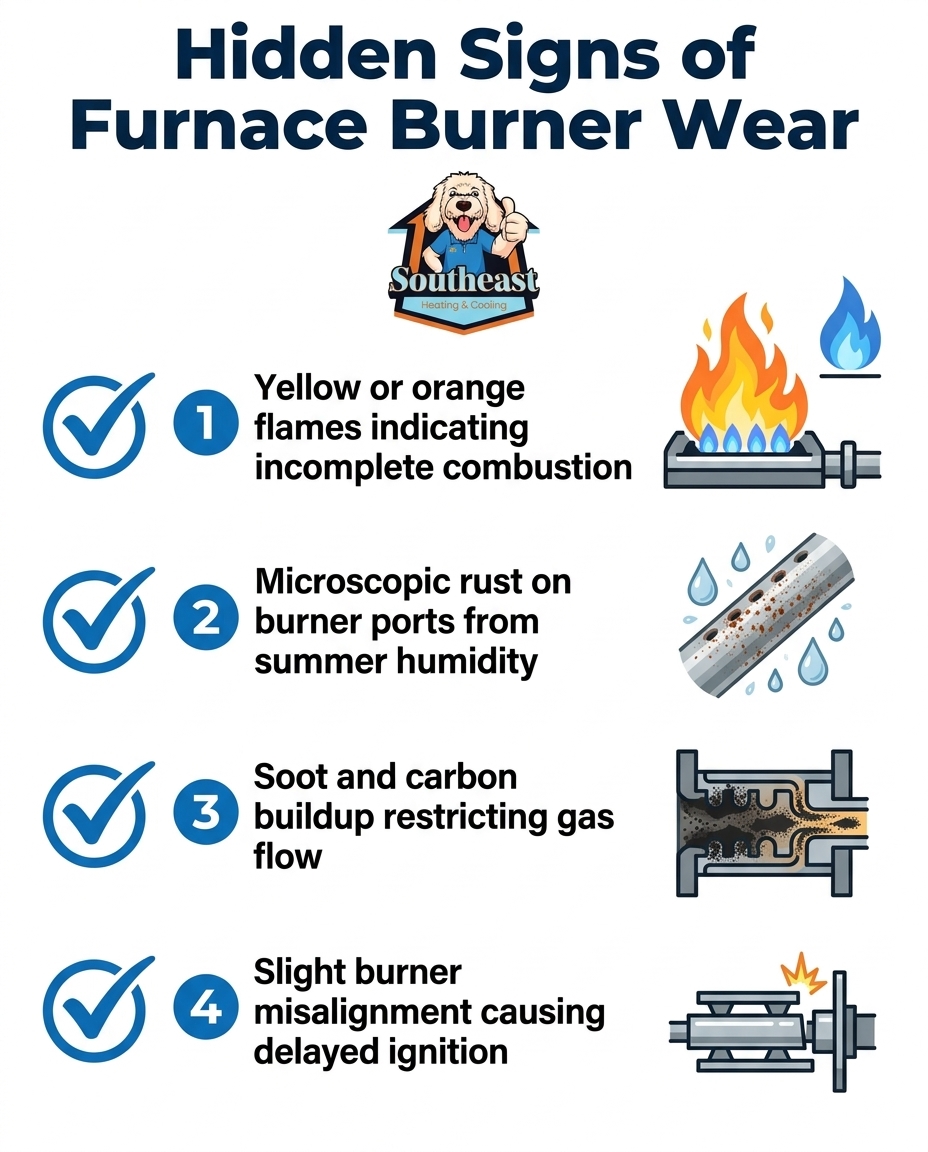
Furnace burners rely on tiny, precisely engineered ports to distribute gas evenly. Even a single millimeter of rust or baked-on dust can disrupt this flow. When the ports are clogged, the gas cannot mix properly with oxygen. This leads to uneven gas distribution, which drastically reduces your heating efficiency. Instead of a clean, hot flame, the furnace produces a weak, cooler flame that forces the system to run longer to heat your home, wasting energy and stressing the internal components.
Identifying Subtle Burner Misalignment
Rust is not the only hidden issue that develops during the off-season. Over years of use, the constant cycle of heating up and cooling down causes the metal inside your furnace to expand and contract. This thermal expansion can eventually cause the burner assembly to shift slightly out of place. Even a microscopic shift in alignment can dramatically impact how your furnace operates.
The angle at which the gas meets the igniter is incredibly critical. If the burner is slightly misaligned, the gas will not catch the spark or hot surface igniter immediately. A generic homeowner checklist usually advises you to simply look for a yellow flame. While a yellow flame is certainly a sign of trouble, waiting for the flame to change color means the problem is already severe.
Working with Southeast Heating & Cooling means you benefit from technicians who possess the thorough, first-hand expertise to catch microscopic misalignment long before the flame turns yellow or a dangerous lockout occurs. During the September pre-heating season, our professionals measure the exact positioning of the burners relative to the igniter and the heat exchanger. Correcting this subtle misalignment prevents future sensor lockouts, ensures immediate ignition, and extends the overall lifespan of your heating unit.
Preventing the Dangerous 'Delayed Ignition' Boom
The Problem: Have you ever heard a loud boom, bang, or rattle right as your furnace turns on? That sound is known as delayed ignition, and it is one of the most dangerous symptoms of ignored burner wear. Delayed ignition happens when gas flows into the combustion chamber but does not ignite right away.
The Cause: This directly connects back to the rust, clogged ports, and misalignment we discussed earlier. If the burner ports nearest the igniter are blocked by off-season corrosion, or if the burner has shifted out of alignment, the gas pools inside the chamber. It continues to build up until it finally reaches a spark or an adjacent flame. When that large pocket of accumulated gas finally catches, it creates a small explosion.
The Solution: The force of this mini-explosion is strong enough to rattle the entire furnace cabinet. Over years of servicing local heating systems, our team has seen how the repeated shockwaves from delayed ignition can cause severe safety risks, most notably creating stress fractures in your heat exchanger. A cracked heat exchanger allows deadly carbon monoxide to leak into your home's breathing air. If the damage becomes severe enough, ignoring burner wear can eventually mean replacing a gas furnace in Georgia years earlier than expected. A proactive fall tune-up eliminates the rust and corrects the alignment, ensuring the gas ignites instantly and safely every single time.
The Specialized Tools Used During a Fall Diagnostic
A professional burner inspection relies on more than just a good flashlight. To verify that your system is operating at peak safety and efficiency, technicians utilize specialized diagnostic equipment that goes far beyond a basic visual check. This level of precision is exactly why this work requires a licensed professional.
• Combustion Analyzers: This highly sensitive tool is inserted into the exhaust flue while the furnace is running. It measures the exact makeup of the exhaust gases, checking for proper gas-to-air ratios. It tells the technician immediately if the burners are producing unsafe levels of carbon monoxide or if the fuel is not burning efficiently.
• Digital Manometers: Gas pressure must be perfectly calibrated for burners to function correctly. A digital manometer measures the gas pressure entering the valve and the pressure exiting the manifold into the burners. If the pressure is too high or too low, the technician can adjust it to match the manufacturer's exact specifications.
• Inspection Cameras (Borescopes): Sometimes, the most dangerous wear is hidden behind the burner assembly or deep inside the curves of the heat exchanger. Technicians use flexible, high-definition borescopes to look for hidden soot, carbon buildup, or hairline cracks that are impossible to see with the naked eye.
When our technicians travel to local service areas during the September pre-heating season, they carry these specialized diagnostic tools on every single truck. We rely on this equipment daily because it guarantees that your burner assembly isn't just wiped down, but scientifically verified for complete safety.
Ensuring Your Heating System is Ready for Winter
A safe, efficient winter starts with a clean, perfectly aligned burner assembly. The hidden wear caused by summer humidity doesn't have to dictate how your furnace performs when the temperatures finally drop. By addressing microscopic rust and slight misalignments early, you protect your equipment from unnecessary strain and prevent the dangerous risks of delayed ignition.
There is immense peace of mind that comes from knowing your heating system has been thoroughly vetted by a professional. Before the freezing weather arrives and puts your furnace to the test, taking the time to schedule a comprehensive diagnostic is the smartest move you can make for your home. Protect your comfort and your safety by ensuring those burners are ready to fire up flawlessly for Buford GA area homes all winter long.
Frequently Asked Questions
What are the signs of a bad furnace burner?
The most common signs of a bad furnace burner include a yellow or orange flame, a loud booming noise when the system turns on, or a lingering smell of gas near the unit. A healthy burner should produce a steady, crisp blue flame. If you notice strange noises or uneven heating, it usually means the burner ports are clogged with rust or debris.
Why does my furnace make a loud boom when turning on?
That loud boom is caused by delayed ignition, which happens when gas builds up in the combustion chamber before finally catching a spark. This is typically the result of dirty, rusted, or misaligned burners that prevent the gas from igniting instantly. It is a serious safety issue that requires immediate professional attention to prevent damage to your heat exchanger.
How does summer humidity affect my furnace?
High summer humidity causes condensation to form on the cold metal components of an idle furnace, especially in basements and attics. Over several months, this trapped moisture mixes with household dust to create microscopic rust on the burner assembly. This off-season corrosion can easily block gas flow once you try to turn the heat on in the fall.
Why is my furnace burner flame yellow or orange?
A yellow or orange flame indicates incomplete combustion, meaning the gas is not mixing with enough oxygen. This is almost always caused by dirt, soot, or rust restricting the burner ports. Incomplete combustion is inefficient and can lead to dangerous levels of carbon monoxide production.
Can I inspect or clean my furnace burners myself?
No, inspecting and cleaning furnace burners is not a safe do-it-yourself project. The components are highly sensitive, and improper cleaning can permanently damage the gas orifices or misalign the assembly. Because of the serious risks of gas leaks and carbon monoxide exposure, this work must always be performed by a licensed professional.
How long does a professional burner inspection take?
A thorough burner inspection is usually completed as part of a comprehensive fall tune-up, which typically takes between one to two hours. During this time, the technician will shut off the power, extract the burners, clean away any rust, check the alignment, and use specialized tools to verify safe gas pressure and combustion.
Related Blogs
Customer Testimonials


Financing



Latest Blogs

Navigating 24-Hour Furnace Emergencies: What Justifies a Midnight Call in Buford

Why Your Heat Pump Is Vibrating During the Fall Startup (And When to Call a Pro)
Repairing a Leaking AC Coil in September vs. Holding Out for a Winter Heat Pump Replacement