


Why Your Heat Pump Is Vibrating During the Fall Startup (And When to Call a Pro)
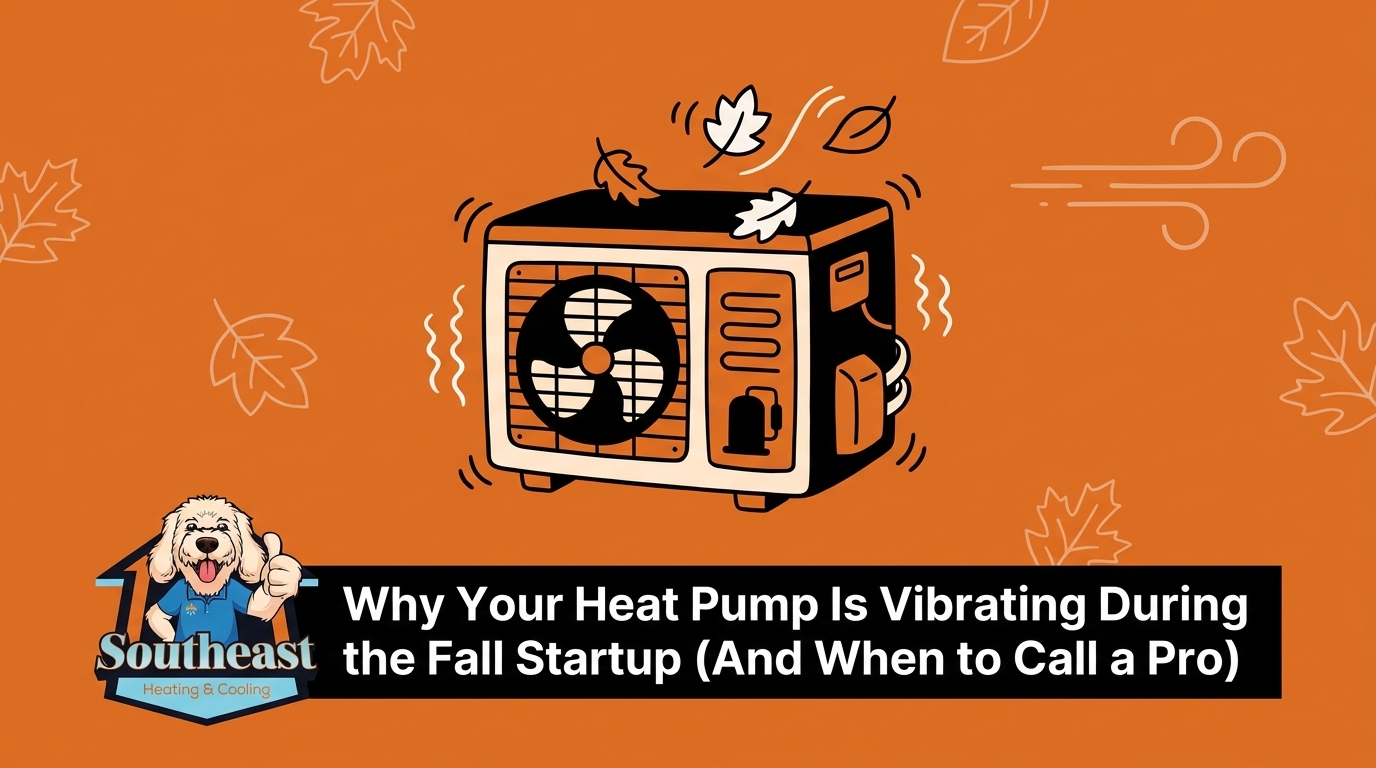
Are Sudden Heat Pump Noises Normal During the Fall Transition?
Have you turned on your thermostat for the first time this season only to be greeted by a loud rumble, leaving you searching for local service expertise and area tips to figure out what is wrong? You are not alone. The mid-fall October heating startup is a notorious time for HVAC surprises. After sitting dormant or running exclusively in cooling mode for months, asking your system to suddenly produce heat can result in a symphony of strange sounds and unfamiliar smells. For many homeowners in Buford, GA, this sudden onset of mechanical noise triggers immediate panic, leading to fears of total system failure right as the cooler weather sets in.
The core decision point for any homeowner during this seasonal transition is distinguishing between normal startup symptoms and a dangerous mechanical fault that requires immediate professional intervention. A brief noise might just be the system shifting gears, but a sustained, aggressive vibration rattling your windows is a clear sign that something is mechanically out of balance. Understanding the difference is the key to protecting your equipment and ensuring a warm, quiet winter.
If you are unsure about the sounds your system is making, a professional evaluation is the safest next step. Learn more about our comprehensive Heating Services and how we can help prepare your home for the dropping temperatures.
Before you rush to turn off the breaker, it helps to understand exactly what your heat pump is doing out there in the yard. The transition from summer cooling to fall heating is not just a digital signal on your thermostat; it is a significant physical and mechanical shift inside the outdoor unit. By knowing what to expect, you can approach your fall heating preparation with confidence rather than anxiety.
What Happens When Your System Switches to Heating Mode?
To understand why your heat pump makes unusual noises in October, you first have to understand the mechanical shift that triggers them. Unlike a traditional furnace that simply ignites gas or powers up electric coils to create heat, a heat pump actually reverses its entire operation to warm your home. This process is complex, involves highly pressurized gases, and requires several heavy-duty mechanical components to change direction simultaneously.
The primary component responsible for this transition is the reversing valve. This heavy brass valve acts as the traffic director for your system's refrigerant. Throughout the long summer months, the reversing valve directs hot refrigerant gas outside to be cooled. When you switch your thermostat to heating mode for the first time in the fall, a solenoid energizes and physically slides a heavy internal mechanism inside the valve. This action reverses the refrigerant flow, pulling ambient heat from the outside air and directing it inside your home.
Because the system is dealing with high-pressure gas, the moment the reversing valve shifts, it is entirely normal to hear a loud "whoosh" or a distinct clicking sound. This is simply the pressure equalizing and changing direction. Additionally, the sudden change in temperature across the metal coils and ductwork causes rapid thermal expansion. As the cold metal suddenly heats up, it expands, which can cause popping, ticking, or light banging sounds in your ductwork or the unit's chassis.
While a brief whoosh, a click, or temporary ticking sounds are standard operating procedures for a heat pump, sustained vibration is not. If your system sounds like a jet engine preparing for takeoff and the noise does not settle down after a few minutes, you are dealing with a mechanical issue rather than a simple seasonal transition. For more information on how these systems operate year-round, explore our Heat Pump Services.
Is It Normal to Smell Burning Dust Alongside Unusual Sounds?
The Science Behind the Burning Dust Smell
One of the most common and alarming symptoms homeowners experience during the mid-fall October heating startup is the sudden, pungent smell of burning dust permeating the house. When combined with the clicks and whooshes of the reversing valve, this odor often leads people to believe their HVAC system is actively on fire. However, this smell is usually a completely normal part of the seasonal transition. Your heat pump system likely includes auxiliary or emergency electric heat strips located inside the indoor air handler. Throughout the spring and summer, airborne dust, pet dander, and microscopic debris settle on these dormant heating elements.
How Long Should the Odor Last?
When the system switches to heating mode—especially if it is chilly enough outside that the heat pump calls for auxiliary heat to help warm the house quickly—those electric strips heat up to hundreds of degrees. The settled dust and debris are instantly incinerated, creating that distinct burning smell that gets pushed through your vents. In a properly functioning system, this odor should dissipate entirely within the first few heating cycles, typically lasting no more than 30 to 60 minutes of active run time. Opening a few windows to let the home air out during this initial cycle is usually all that is required.
Warning Signs of an Electrical Emergency
While burning dust is normal, it is crucial to differentiate between the smell of incinerated household dust and the smell of burning electrical wires or melting plastic. The dust smell is akin to a dusty radiator heating up. An electrical burning smell is sharp, acrid, and often smells like burning rubber or melting insulation. If the odor does not fade after an hour, if it gets progressively stronger, or if you ever smell burning plastic or ozone, turn the system off immediately at the thermostat and the breaker. Electrical faults are dangerous and require a licensed professional to diagnose and repair before the system is operated again.
Why Is My Heat Pump Vibrating So Much Outside?
If the sounds coming from your outdoor unit go beyond a simple click or whoosh and escalate into a loud, continuous rattle or violent shaking, you are dealing with excessive vibration. To understand why this happens, we have to look at the climate context. Buford's high-humidity summer environment and relentless heat mean your air conditioning runs almost constantly for months on end. This continuous operation causes thousands of hours of micro-vibrations, gradually loosening hardware and stressing moving parts. By the time fall arrives, the equipment is already fatigued, making the transition to heating mode the breaking point for several components.
Excessive vibration is rarely a problem that resolves itself. It is usually a symptom of a physical imbalance or a degrading mechanical part that requires a licensed professional to safely diagnose and repair. Common culprits include:
• Unbalanced fan blades: The large fan at the top of your outdoor unit must be perfectly balanced to spin smoothly. Over the summer, heavy storms can blow debris, twigs, or leaves into the unit, chipping or bending a fan blade. Even a slight bend will cause the entire unit to shake violently when the motor reaches full speed.
• Worn motor bearings: The fan motor relies on sealed bearings to spin without friction. After months of continuous summer operation, these bearings can dry out or degrade. When bearings begin to fail, the motor will emit a loud, grinding vibration that reverberates through the entire chassis.
• Loose access panels and rusted screws: The continuous micro-vibrations of summer operation can slowly back out the screws holding the sheet metal access panels in place. When the unit kicks on, these loose panels rattle loudly against the metal frame.
• Unlevel concrete equipment pads: Over time, the ground beneath your outdoor unit can settle, especially after heavy summer rains. If the concrete pad shifts, the heat pump sits at an angle, causing the internal compressor to vibrate abnormally against its rubber mounting grommets.
Attempting to fix these issues without proper training can result in severe injury or permanent damage to the compressor. If your unit is shaking aggressively, turn it off and seek professional help. You can learn more about the specific causes of these issues in our guide on Understanding Unusual Heat Pump Vibrations.
Normal Startup Symptoms vs. Abnormal Mechanical Faults
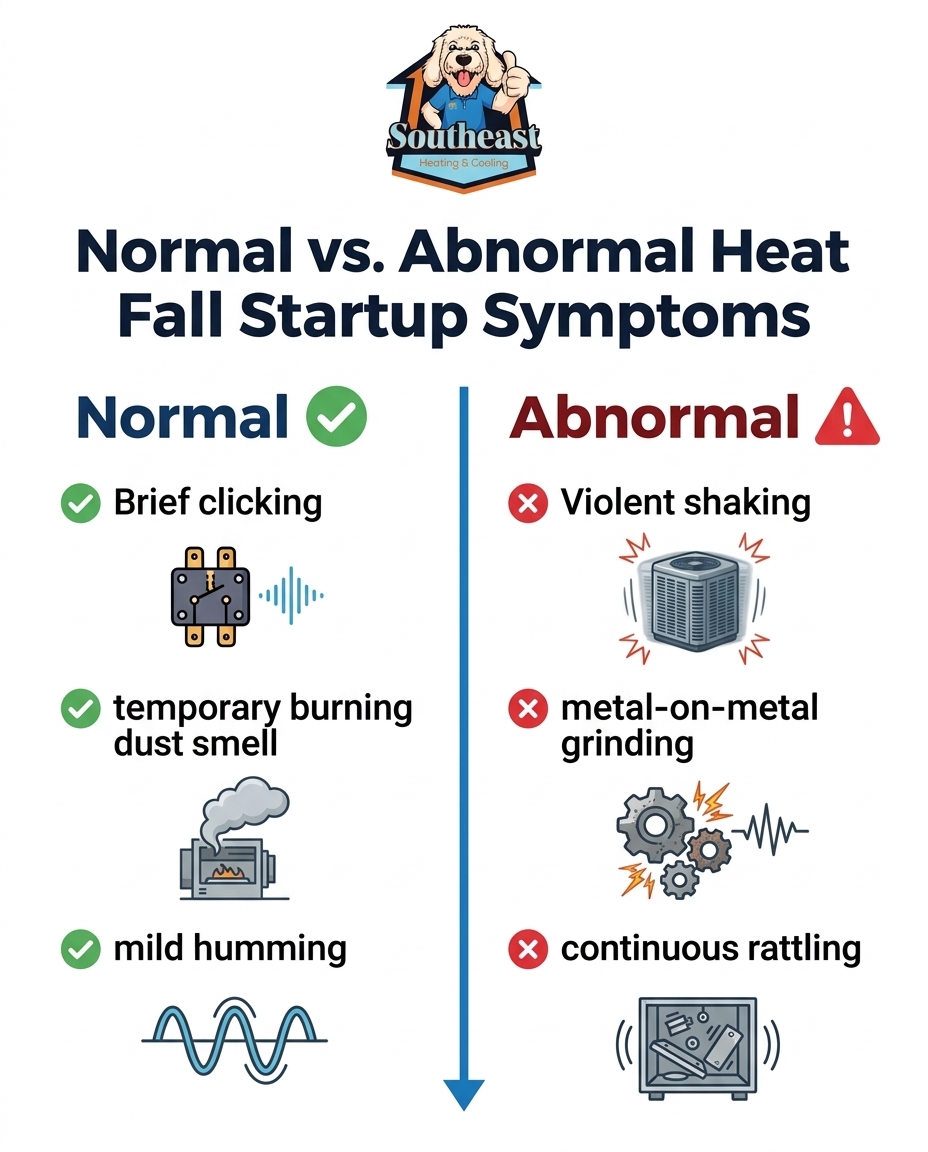
When the temperature drops and you need heat, the last thing you want to do is guess whether your system is safe to operate. Having a clear, non-DIY framework to evaluate your heat pump's behavior can save you from unnecessary panic and prevent catastrophic equipment damage. The table below outlines the most common symptoms experienced during a fall startup, categorizing them as normal operational quirks or abnormal faults that require immediate professional attention.
• Brief "whoosh" or clicking sound — Status: Normal — What It Usually Means: The reversing valve is shifting refrigerant flow for heating mode. — Recommended Action: None. The sound should subside within seconds.
• Temporary burning dust smell — Status: Normal — What It Usually Means: Dust on the auxiliary heat strips is burning off after summer dormancy. — Recommended Action: Monitor. Open windows if needed. Smell should fade in 30-60 minutes.
• Mild humming or ticking from ducts — Status: Normal — What It Usually Means: Thermal expansion of the metal ducts and system chassis as they heat up. — Recommended Action: None. This is standard physical expansion.
• Steam rising from the outdoor unit — Status: Normal — What It Usually Means: The system is in defrost mode, melting frost off the outdoor coils. — Recommended Action: None. Defrost cycles are a normal part of winter heat pump operation.
• Continuous, loud rattling or vibrating — Status: Abnormal — What It Usually Means: Loose access panels, loose screws, or an unlevel equipment pad. — Recommended Action: Turn off system. Call a professional to secure hardware and level unit.
• Metal-on-metal grinding or screeching — Status: Abnormal — What It Usually Means: Failing fan motor bearings or internal compressor damage. — Recommended Action: Turn off immediately. Do not operate until a technician diagnoses the motor.
• Violent shaking of the outdoor chassis — Status: Abnormal — What It Usually Means: Severely unbalanced fan blades, broken mounts, or trapped debris. — Recommended Action: Turn off immediately to prevent the fan blade from destroying the coil.
If you observe any of the abnormal symptoms listed above, the safest course of action is to turn the system off at the thermostat. Allowing a heat pump to run while violently shaking or grinding will rapidly escalate a minor repair (like tightening a fan blade) into a major expense (like replacing a ruptured refrigerant coil or a blown compressor).
When to Get a Professional Diagnosis for Heat Pump Noises
Ignoring loud vibrations is one of the most expensive mistakes a homeowner can make. A heat pump is a precision piece of machinery. When it vibrates abnormally, that kinetic energy transfers to the delicate copper refrigerant lines inside the unit. Over time, that constant shaking will cause the copper lines to rub against the metal chassis, eventually wearing a hole in the pipe, venting all your refrigerant into the atmosphere, and potentially destroying the compressor. What starts as a simple loose panel can easily turn into a failed motor or a ruined system if left unchecked.
However, we understand that calling a professional can be stressful, especially if you fear you will be told the entire system needs replacing. A typical pattern we see involves homeowners being told by other contractors that a noisy, vibrating system is completely faulty and requires a costly replacement. For example, one Buford homeowner reached out during the summer seeking a second opinion on their air conditioning system that was deemed faulty and slated for replacement by another company. A technician provided a thorough second opinion, offered repair options, and serviced the existing system, getting it back online and avoiding a massive, unnecessary expense.
This exact same principle applies to loud heat pumps in the fall. Not all loud noises mean a total system replacement is needed. Often, it is just a matter of rebalancing a fan blade, replacing a worn motor bearing, or installing new rubber vibration dampeners. To give you peace of mind, we proudly offer Free Second Opinions. This provides a risk-free way to diagnose abnormal vibrations without the fear of being pressured into unnecessary replacements. Getting a trusted expert to evaluate an aging, noisy system before making major financial decisions is always the smartest move.
How to Prevent Winter Breakdowns with Fall Maintenance
The most effective way to stop heat pump vibrations before they start is through proactive preventative care. Fall maintenance is not just a cursory glance at your equipment; it is a comprehensive mechanical and electrical audit designed to catch the wear and tear inflicted by the long summer cooling season. By addressing these minor issues in October, you prevent them from becoming catastrophic failures in January when freezing temperatures arrive and you need your heating system the most.
During a professional fall inspection, a licensed technician will dive deep into the components that cause vibration and noise. They will check all electrical and mechanical connections, tightening any lugs or screws that have vibrated loose over the summer. They will inspect the outdoor fan blade for proper balance and clear any debris that may have accumulated inside the chassis. Furthermore, they will test the motor's amp draw and inspect the bearings to ensure they are operating smoothly without excess friction. Catching a degrading motor bearing during a routine check is vastly preferable to having the motor seize up in the middle of a winter night.
Proactive scheduling is essential. Do not wait for the first freezing night to discover that your heat pump is shaking violently or failing to produce heat. By taking action during the mild mid-fall weeks, you ensure your system is calibrated, tightened, and ready to perform efficiently all winter long. Explore the benefits of consistent care by reviewing our HVAC Maintenance Plan, which is designed to keep your system running quietly and reliably year after year.
Frequently Asked Questions About Heat Pump Noises
Is it normal for a heat pump to vibrate loudly in the winter?
Mild vibration is normal due to the compressor running, but loud vibration is not. Because heat pumps contain large moving parts like the compressor and condenser fan, a low, steady hum is expected during operation. However, loud, rattling vibration is abnormal and usually indicates loose components, failing bearings, or ice buildup on the fan blades. If the vibration can be felt inside the home or sounds like a washing machine off-balance, it requires a professional assessment.
Why does my heater smell like burning dust and rattle when it turns on?
Combustion of settled dust on the auxiliary heat strips causes the burning smell, while rattling suggests a mechanical imbalance. Over the summer, dust collects on the dormant heating elements, which then burns off rapidly during the first fall startup. If the system is rattling simultaneously, it strongly suggests the blower motor, outdoor fan blades, or access panels have loosened and need professional adjustment to prevent further damage.
How do I stop my heat pump from vibrating?
Homeowners can clear debris from around the unit, but internal repairs require an expert. You can safely remove twigs, leaves, or yard waste that may be leaning against the outer chassis, and ensure the concrete pad is clear. However, internal adjustments like balancing fan blades, replacing motor bearings, or tightening internal compressor mounts require a licensed HVAC technician to perform safely.
When should I worry about heat pump noise?
Worry if the noise is a high-pitched squeal, metal-on-metal grinding, or violent shaking. While clicks, whooshes, and brief humming are part of the normal reversing valve operation and thermal expansion, aggressive mechanical noises indicate a part is failing. If you hear grinding or see the unit shaking, turn the system off immediately at the thermostat and call for a professional inspection to prevent destroying the compressor.
Can a loose access panel cause a loud rattling sound?
Yes, loose screws on the outer chassis are a very common cause of loud vibrational noise. The continuous operation of the unit over the summer can slowly back out the screws holding the sheet metal panels in place. When the unit turns on, the loose metal vibrates violently against the frame. A technician can quickly secure these panels and replace missing screws during a routine maintenance visit.
Get Peace of Mind for Your Fall Heating Needs
Transitioning your home from cooling to heating should bring comfort, not anxiety. While it is completely normal to experience a brief burning dust smell or hear the distinct whoosh of the reversing valve during the mid-fall October startup, excessive vibration and metal-on-metal grinding should never be ignored. Understanding these symptoms empowers you to make smart decisions about your home's comfort and safety, knowing exactly when to let the system run and when to shut it down.
If your heat pump is making a racket that leaves you concerned, do not wait for the noise to turn into a complete breakdown. Reach out for an expert evaluation to ensure your system is mechanically sound, properly balanced, and ready to handle the dropping temperatures. A quick professional diagnosis today guarantees a warm, quiet, and stress-free winter for you and your family.
Related Blogs
Customer Testimonials


Financing



Latest Blogs
Navigating 24-Hour Furnace Emergencies: What Justifies a Midnight Call in Buford
Why Your Heat Pump Is Vibrating During the Fall Startup (And When to Call a Pro)
Repairing a Leaking AC Coil in September vs. Holding Out for a Winter Heat Pump Replacement