

Navigating 24-Hour Furnace Emergencies: What Justifies a Midnight Call in Buford
Is Your Sudden Heating Issue a True Midnight Emergency?
Are you staring at a blank thermostat at 2 a.m., wondering if you should wake up a technician or just grab another blanket? Navigating 24-Hour Furnace Emergencies: What Justifies a Midnight Call in Buford is a common dilemma for homeowners, especially when the first chill of the season hits. At Southeast Heating & Cooling, our team frequently fields panicked calls during the first October cold snap, and we know exactly how stressful a sudden furnace failure in the middle of the night can be. You face a stressful decision point: shut the system off and wait for morning, or request an immediate midnight dispatch.
To help you navigate this decision, you can explore our complete HVAC services.
Not all heating malfunctions require urgent, middle-of-the-night intervention; some are mere inconveniences that can safely wait for standard business hours. Understanding the difference between a life-safety hazard and a standard repair need saves you from unnecessary stress and panic. When you know exactly what symptoms to look for, you can protect your family without making rushed decisions in the dark.
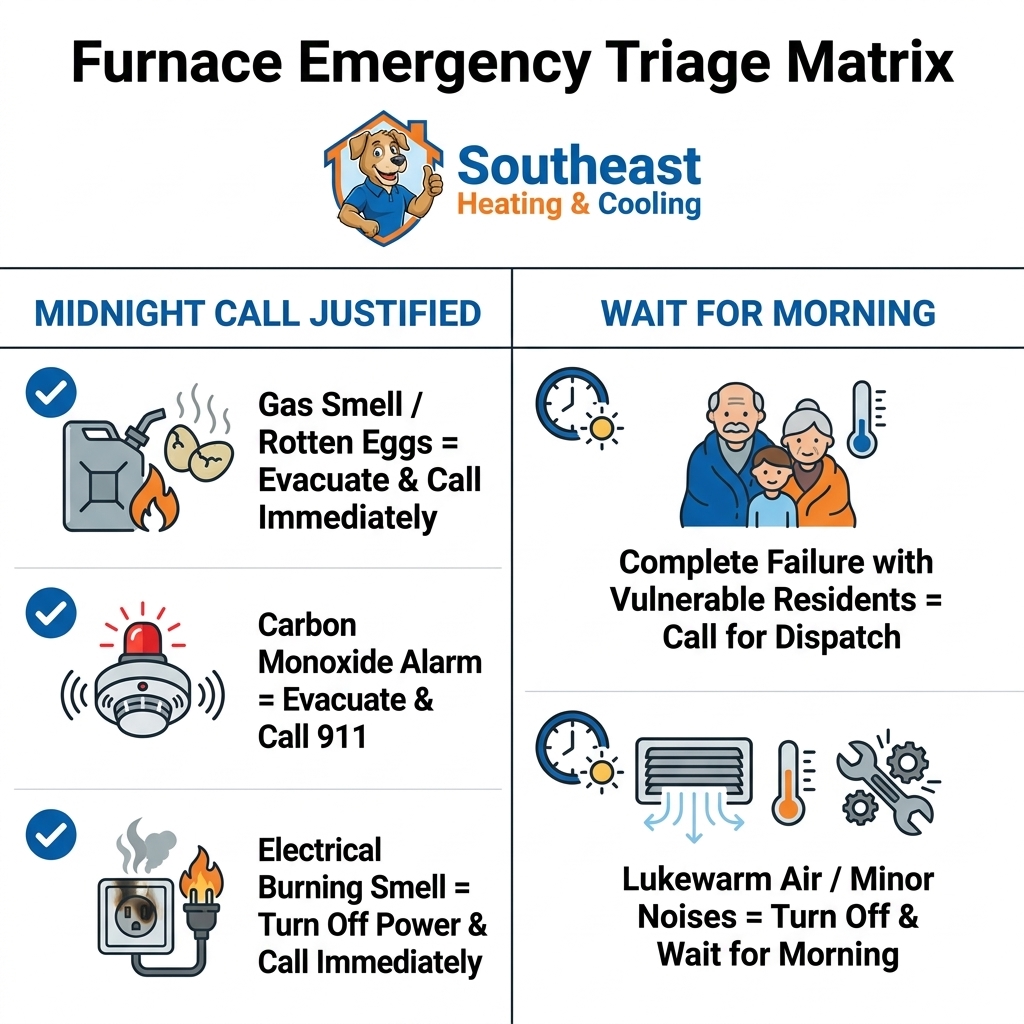
Common signs that cause panic but may not be emergencies:
• A blank thermostat screen: Often a simple battery issue or a tripped safety switch that can be addressed in daylight.
• Lukewarm air: Uncomfortable, but usually points to a dirty filter or minor sensor glitch rather than a safety hazard.
• Minor squeaks or rattles: Signs of normal wear and tear that do not pose an immediate threat to your home.
By establishing a clear baseline for what constitutes a true emergency, you can confidently triage your heating system and make the right call for your household.
Immediate Safety Hazards: When to Evacuate and Call Right Away
Certain situations leave no room for hesitation. When a heating malfunction introduces a direct threat to your family's health or safety, you must take immediate action. Natural gas leaks and carbon monoxide exposure are the two most critical hazards associated with residential heating systems. At Southeast Heating & Cooling, our reliable 24/7 dispatch genuinely prioritizes these true safety hazards over minor inconveniences. In our years of restoring safe heating to Buford homes, we've learned that families facing real danger must get the fastest possible response.
If you encounter these severe warning signs, your first priority is evacuation, followed by contacting emergency responders, and then reaching out to contact us for 24-hour dispatch.
What to Do If You Smell Rotten Eggs
Natural gas in its raw form is completely odorless. Utility companies intentionally add a chemical called mercaptan to the gas supply, giving it a distinct, pungent smell resembling rotten eggs or sulfur. This odor is an immediate evacuation trigger.
• Recognize the warning: Treat even a faint smell of rotten eggs as a severe warning sign of a gas leak near your furnace or gas lines.
• Evacuate immediately: Get all family members and pets out of the house without delay. Do not stop to gather belongings.
• Avoid electrical sparks: Never attempt to investigate a gas leak yourself with a flashlight, and do not turn electrical switches on or off, as a tiny spark can ignite the gas.
• Call from outside: Once you are a safe distance from the property, call your local utility company and emergency responders.
Responding to Carbon Monoxide Alarms
Unlike natural gas, carbon monoxide (CO) is completely odorless, colorless, and tasteless. It is a dangerous byproduct of incomplete combustion. Because human senses cannot detect it, functional CO detectors are the only reliable early warning system you have. If you are searching for 24-hour furnace repair Buford because your CO alarm is blaring, you are dealing with a life-safety emergency.
• Treat every alarm seriously: Never assume a carbon monoxide detector is giving a false alarm. Treat every activation as a genuine emergency.
• Ventilate if possible: Open windows and doors on your way out if you can do so quickly, but prioritize immediate evacuation above all else.
• Seek medical attention: If anyone in the home is experiencing headaches, dizziness, nausea, or confusion, inform emergency responders immediately.
• Wait for clearance: Do not re-enter the property until the fire department or utility company has officially cleared the home and deemed it safe.
Electrical Burning Smells and System Overheating
Your furnace relies on a complex network of electrical components to ignite the burners, run the blower motor, and communicate with the thermostat. When these electrical systems fail, they can create significant hazards. An acrid, electrical burning smell—often described as melting plastic, hot metal, or ozone—indicates overheating wiring, failing capacitors, or a seized blower motor. Our technicians often respond to late-night calls where continuing to run a system with severe electrical issues risks permanent equipment damage or, worse, a house fire.
If you suspect an electrical short or overheating motor, you need emergency furnace repair to prevent a dangerous situation from escalating.
Distinguishing Normal Startup Odors from Electrical Faults
During the first few weeks of autumn in Buford GA, it is common to notice a distinct smell when you turn your heating system on for the first time. However, our team typically sees that knowing the difference between normal seasonal odors and dangerous electrical smells is critical for safe operation.
• Smells like warm, toasted dust — Likely Cause: Dust burning off the heat exchanger after months of summer inactivity. — Required Action: Normal. Should dissipate within 30 to 60 minutes of operation.
• Smells like melting plastic or rubber — Likely Cause: Overheating wires, melting insulation, or a failing blower motor belt. — Required Action: Turn off the system immediately at the breaker and call for emergency service.
• Sharp, metallic ozone smell — Likely Cause: Electrical arcing or a seized motor drawing too much amperage. — Required Action: Turn off the system immediately and request an urgent inspection.
Steps to take if you suspect an electrical emergency:
1. Check the circuit breaker: A furnace that repeatedly trips your circuit breaker is signaling a dangerous electrical short. Do not keep resetting the breaker, as this can cause wires to overheat and catch fire.
2. Shut off the power: If you smell melting plastic or ozone, immediately turn the furnace power switch to the "off" position. If the switch is unresponsive, flip the dedicated breaker in your main electrical panel.
3. Monitor the area: Keep an eye on the furnace room for any signs of smoke. If you see smoke or visible sparking, evacuate and call the fire department.
4. Wait for a professional: Do not attempt to open the furnace cabinet to inspect the wiring yourself. High-voltage components retain dangerous charges even after the power is shut off.
Freezing Temperatures and Vulnerable Household Members
A complete loss of heat transforms from an inconvenience into an emergency based heavily on environmental factors and who is living inside the home. If the indoor temperature drops rapidly and threatens the safety of the occupants, you are dealing with a situation that justifies a midnight call.
It is important to understand the local climate context. Buford's autumn cold snaps feature sharp night drops, requiring you to monitor your thermostat closely. However, we consistently note that daytime warming often mitigates severe pipe-freezing risks compared to deep northern winters. This means that if your home retains heat reasonably well, a midnight breakdown during an October first cold snap might only result in a chilly morning rather than frozen plumbing.
Assessing the Risk to Vulnerable Residents
The physical resilience of your household members is the most important factor when deciding whether to call for emergency service.
• Infants and toddlers: Very young children lose body heat much faster than healthy adults and cannot always communicate that they are dangerously cold.
• Elderly residents: Older adults often have slower metabolisms and poorer circulation, making them highly susceptible to hypothermia even in moderately cold indoor temperatures.
• Compromised immune systems: Individuals recovering from illness or managing chronic health conditions can see their symptoms exacerbated by sudden indoor temperature drops.
• Lack of secondary heat: If your home lacks safe secondary heating sources, such as approved electric space heaters or a functional fireplace, a midnight call is entirely justified to protect vulnerable family members.
Furnace Issues That Can Safely Wait Until Sunrise
Providing a clear triage list of inconveniences that do not require emergency dispatch saves homeowners unnecessary panic and late-night disruption. Many common furnace malfunctions are frustrating but perfectly safe to leave until standard business hours. If your home is well-insulated and retaining heat adequately, we recommend safely waiting for a standard next-day appointment while you research the costs to replace a gas furnace in Georgia or prepare for a routine repair.
Lukewarm Air and Minor Inefficiencies
The symptom: The furnace is running, and the blower is pushing air through the vents, but the air feels lukewarm or barely room temperature.
The reality: In our experience performing fall heating startups across Buford, this is often caused by a severely clogged air filter restricting airflow, or a minor issue with the flame sensor. While it means your system is not operating at peak performance, it is still operating safely. The furnace is simply struggling to keep up with the thermostat demand. You can turn the system off to prevent it from overworking, grab some extra blankets, and schedule a standard service call for the morning.
Thermostat Glitches
The symptom: The thermostat screen is completely blank, or the interface is unresponsive to your inputs.
The reality: A blank thermostat screen often means dead batteries. Before assuming a catastrophic system failure, try replacing the batteries with fresh ones. If the screen remains blank, it could indicate a tripped condensate float switch or a blown low-voltage fuse on the control board. Neither of these issues poses a safety hazard to your home in Buford GA. You can safely wait until sunrise for a technician to diagnose the communication error.
Minor Noises and Rattles
The symptom: You hear a persistent squeak, a minor rattle, or a humming noise coming from the utility closet when the furnace runs.
The reality: A pattern we see often is that minor squeaks, rattles, or fan noises indicate normal wear and tear—such as a loose panel, a dry bearing, or an unbalanced blower wheel. While these issues should be addressed promptly to prevent further mechanical wear, they do not necessitate a 3 AM emergency visit. Turn the system off if the noise is too disruptive to sleep, and call for service during daylight hours.
How to Safely Shut Down Your System While Waiting
If you suspect a non-emergency issue and have decided to wait until morning, it is crucial to shut the equipment down properly. Allowing a struggling furnace to run continuously overnight can turn a minor repair into a major component failure. By taking a few simple steps, you can protect your equipment while you wait for a technician to arrive at one of our service areas in Georgia.
Follow these steps to safely power down your heating system:
1. Turn the thermostat off: Go to your main thermostat and switch the system setting from "Heat" or "Auto" to the "Off" position. This stops the thermostat from sending heating demands to the control board, preventing the system from straining itself.
2. Locate the furnace power switch: Find the dedicated power switch for your furnace. This switch often resembles a standard light switch and is typically mounted on the side of the furnace cabinet or on a nearby wall in the utility room. Flip this switch to the "off" position to cut the high-voltage power to the unit.
3. Avoid DIY investigations: Do not attempt to open the furnace cabinet, bypass safety switches, or perform unlicensed repairs. Modern heating systems involve complex electronics and combustible gases. Opening the cabinet can void your warranty and put your safety at risk.
4. Prepare for the night: Gather extra blankets and safely use approved secondary heating sources to stay comfortable until morning. If you use electric space heaters, ensure they are plugged directly into a wall outlet (never an extension cord) and keep them at least three feet away from any flammable materials.
Taking these precautions ensures that when your 24-hour furnace repair Buford technician arrives, they find a system that hasn't suffered additional damage from running under duress all night.
Frequently Asked Questions About Furnace Emergencies
What is considered a furnace emergency?
A true furnace emergency is any situation that poses a direct threat to the safety, health, or property of the homeowners. This includes smelling natural gas (rotten eggs), carbon monoxide detector alarms, electrical burning smells, or a complete loss of heat during freezing temperatures when vulnerable individuals (infants, elderly) are in the home. If a situation involves combustible gases or electrical shorts, immediate professional intervention is required to prevent a catastrophe.
Can a furnace wait until morning to be fixed?
Yes, many common furnace issues can safely wait until normal business hours. If your furnace is blowing lukewarm air, making minor rattling noises, or has a blank thermostat screen, it is usually safe to turn the system off and wait. As long as your home in Buford GA is well-insulated and you have blankets or safe space heaters to stay reasonably comfortable, we recommend avoiding a midnight emergency dispatch and opting for a standard morning visit.
What to do if furnace goes out in middle of night?
First, check your thermostat to ensure the batteries are not dead and that it is still set to "Heat." Next, verify that the furnace's power switch hasn't been accidentally bumped off and that your circuit breaker hasn't tripped. If the system still won't turn on, assess the indoor temperature and the vulnerability of your household members. If everyone is safe and healthy, turn the thermostat off, bundle up, and call for service in the morning.
Is a burning smell from a furnace an emergency?
It depends entirely on the type of burning smell. If it smells like warm, dusty air during the first startup of the season, it is likely just dust burning off the heat exchanger and will dissipate quickly. However, if the smell is sharp, acrid, or resembles melting plastic, burning rubber, or ozone, it is an electrical emergency. You should shut off the power to the furnace immediately at the breaker and call for urgent professional help.
Should I turn off my furnace if it smells like gas?
No, you should not touch any electrical switches, including the furnace power switch, if you smell natural gas. A tiny electrical spark from flipping a switch can ignite the gas. Instead, evacuate the home immediately, leaving doors open behind you if possible to help ventilate the area. Once you are safely outside and away from the property, call your utility company and emergency responders to report the leak.
How fast will my house freeze without heat in October?
During an autumn cold snap in the South, your house will lose heat much slower than it would during a deep winter freeze. Because daytime temperatures often warm up significantly, the risk of pipes freezing overnight in October is relatively low. A well-insulated home may drop 10 to 15 degrees overnight without heat, making it chilly and uncomfortable, but it rarely reaches the critical freezing point that causes plumbing disasters.
Does a leaking furnace require a midnight repair call?
A furnace leaking water is usually a sign of a clogged condensate drain line or a failing secondary heat exchanger on a high-efficiency model. While a leak can cause water damage to your floors or surrounding drywall over time, it is rarely a life-safety emergency that requires a 3 AM visit. You can turn the system off at the thermostat, clean up the standing water with towels, and schedule a standard repair for the following day.
Make the Right Call for Your Home's Safety and Comfort
Dealing with a sudden heating failure in the middle of the night is never a pleasant experience, but having a clear, no-nonsense triage list gives you the confidence to make the right decision for your household. By understanding the critical differences between life-safety hazards—like gas leaks and electrical shorts—and minor comfort inconveniences, you can protect your family without giving in to unnecessary panic.
Whether you need an immediate response for a safety hazard or a scheduled visit at sunrise, professional help is always available. Prioritize the safety of your family above all else. If you are dealing with a true emergency or just need peace of mind, reach out to our local experts at Southeast Heating & Cooling to discuss your situation, request a 24-hour furnace repair Buford dispatch, or schedule a thorough daylight inspection.
Related Blogs
Customer Testimonials


Financing


Latest Blogs
Navigating 24-Hour Furnace Emergencies: What Justifies a Midnight Call in Buford
Why Your Heat Pump Is Vibrating During the Fall Startup (And When to Call a Pro)
Repairing a Leaking AC Coil in September vs. Holding Out for a Winter Heat Pump Replacement