


Decoding the Loud Clanking Sound When Your Gas Furnace First Ignites in October
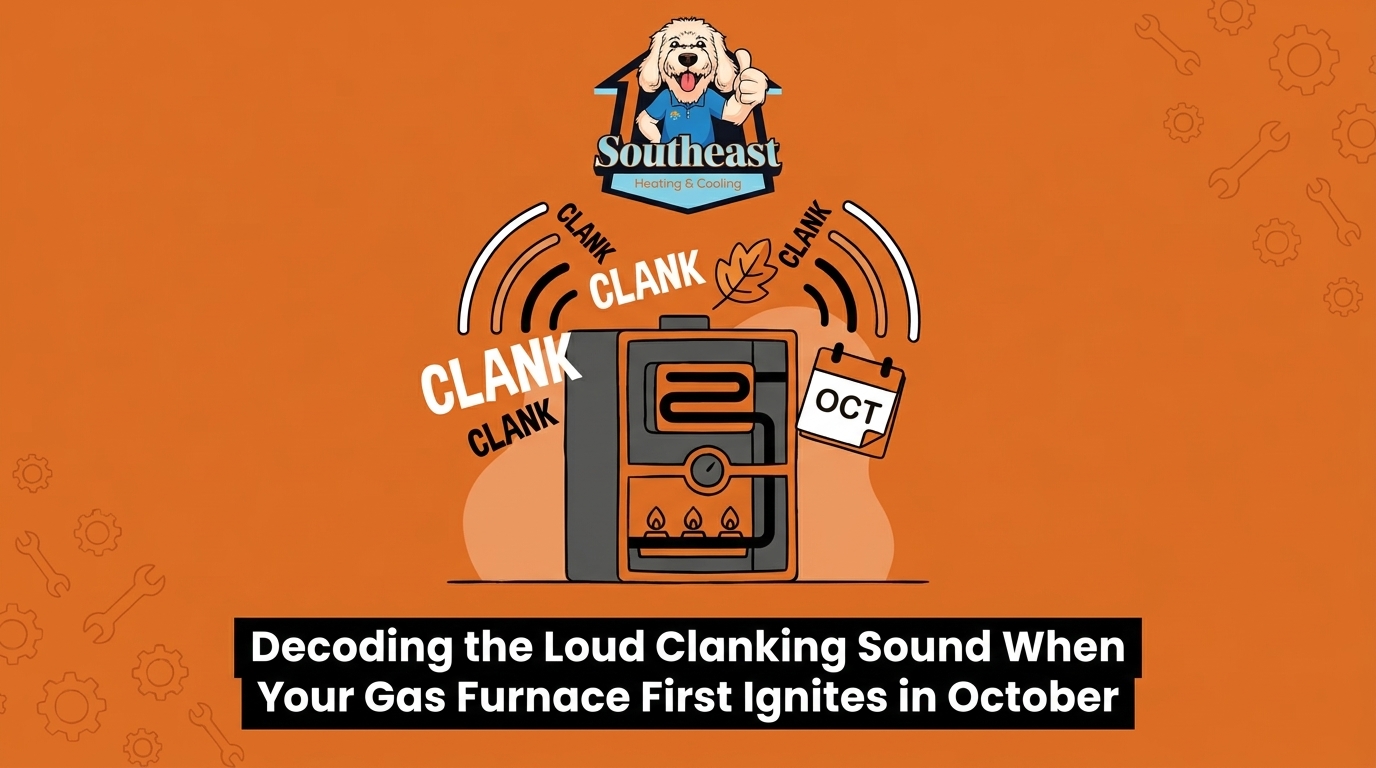
Why Is My Furnace Making a Startling Noise on the First Chilly Morning?
Did you wake up shivering, walk over to your thermostat to turn on the heat, and immediately hear a concussive bang echoing through your house? You are not alone. That loud clanking sound when your gas furnace first ignites is one of the most common—and unsettling—experiences homeowners face during the shift to cooler weather. Hearing a sudden, explosive noise coming from a heavy gas appliance is naturally alarming. It immediately forces a critical decision: is your heating system just shaking off the dust, or is it actively malfunctioning and unsafe to operate?
Making the right call in that moment matters. The difference between a harmless noise and a serious mechanical hazard can impact both your comfort and your home's safety. As a homeowner, you need to know exactly what is happening inside that metal cabinet before you let the system run for another cycle. This guide will help you decode those startling noises so you can confidently distinguish between normal metal expansion and a dangerous gas buildup. If you are ever in doubt about the safety of your system, reaching out for comprehensive HVAC services is the smartest move you can make.
Understanding your furnace's start-up mechanics takes the mystery out of those early-season sounds. We will walk through exactly what happens during a mid-fall October heating startup, why your system behaves differently after sitting idle all summer, and the precise steps you need to take to protect your home.
The Hidden Effects of Summer Dormancy on Your Heating System
Your furnace does not exist in a vacuum. For six or more months out of the year, it sits completely dormant in your basement, attic, or utility closet. While you are busy enjoying the warmer months, your heating system is quietly collecting dust, pet dander, and airborne debris. This prolonged period of summer dormancy is the root cause of many early-fall operational issues.
The Role of High Humidity
In our region, the transition from humid Georgia summers to sudden October cold snaps in Buford accelerates a specific type of buildup. High indoor humidity during the cooling season acts like a glue. As moist air circulates near your dormant heating equipment, the dust settling on your internal components does not just rest there—it cakes onto the surfaces. The burner assembly, which requires absolute precision to function safely, is particularly vulnerable to this sticky layer of debris.
The Shock of the First Cold Snap
When that first chilly morning arrives and your thermostat signals for heat, the system faces a massive, sudden demand. It forces these compromised, dust-caked components to ignite for the first time in over half a year. The burners struggle to operate smoothly through the layer of grime. This mechanical struggle is exactly what leads to unexpected, jarring operational sounds during a mid-fall October heating startup.
Common Dormancy Symptoms to Watch For:
• Dusty odors: A brief burning smell as the system incinerates surface dust off the heat exchanger.
• Sluggish airflow: Debris buildup on the blower motor wheel reducing initial air volume.
• Extended ignition times: The system taking longer than usual to click on and produce warm air.
If these symptoms are accompanied by violent sounds, it is a clear sign that summer dormancy has compromised your system's safety mechanisms, and it may be time for professional heating repair.
Normal Thermal Expansion vs. Dangerous Delayed Ignition
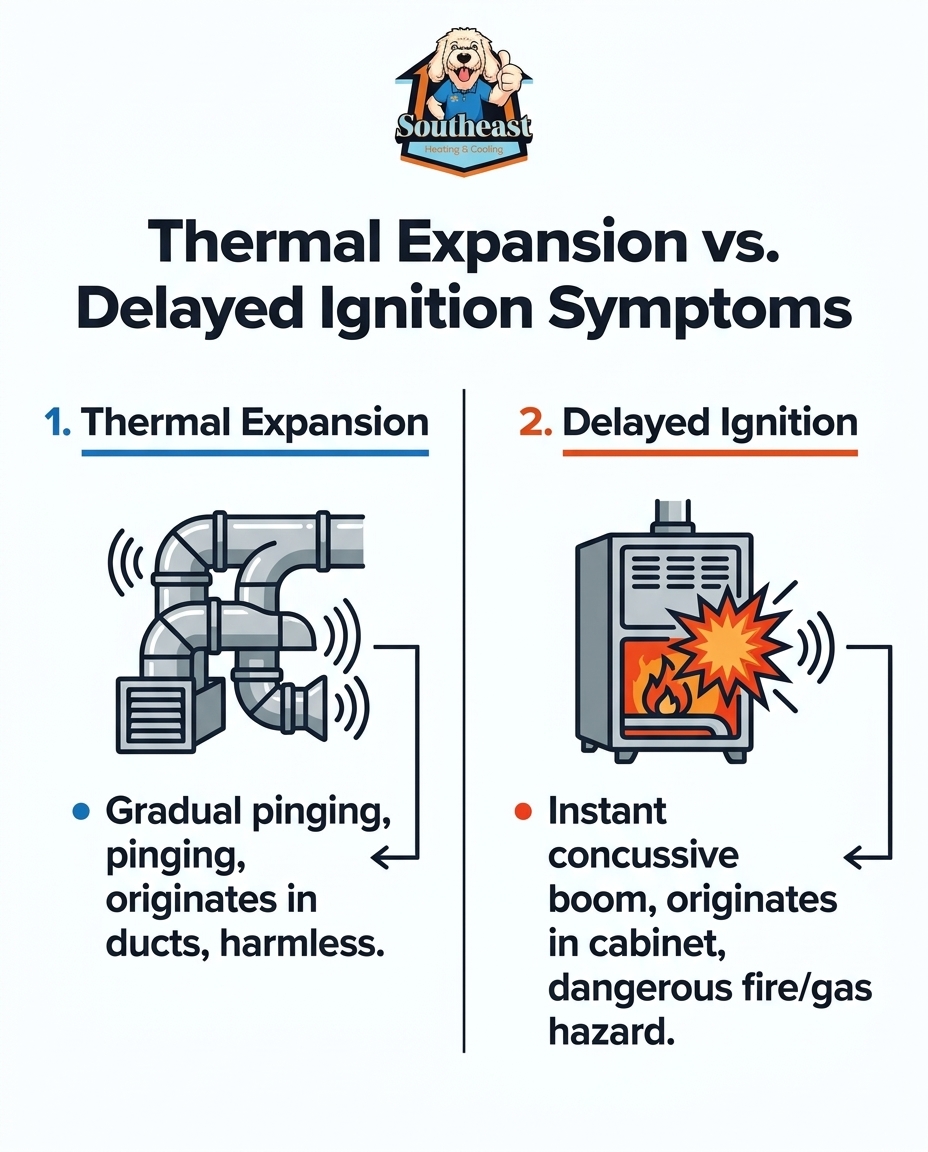
To safely manage your heating system, you need to rely on your senses. Diagnosing the source of a start-up noise comes down to identifying exactly what kind of sound you are hearing and where it originates. The two most common culprits are normal thermal expansion and a highly dangerous condition known as delayed ignition.
Thermal expansion is a completely harmless physical reaction. As your furnace pushes a sudden blast of hot air into cold, lightweight metal ductwork, the metal rapidly expands. This creates a series of metallic pinging, popping, or ticking sounds. Delayed ignition, on the other hand, is a severe mechanical failure. It produces a concussive, booming, or loud clanking sound that originates directly from the furnace cabinet itself, often shaking the floorboards.
Diagnostic Sound Comparison
• Sound Profile — Thermal Expansion (Harmless): Light pinging, ticking, or popping. — Delayed Ignition (Dangerous): Loud boom, concussive clank, or explosion sound.
• Location of Noise — Thermal Expansion (Harmless): Originates in the walls, ceilings, or along the ductwork. — Delayed Ignition (Dangerous): Originates directly inside the main furnace cabinet.
• Timing — Thermal Expansion (Harmless): Happens gradually as warm air flows through the vents. — Delayed Ignition (Dangerous): Happens instantly at the exact moment of start-up.
• Physical Impact — Thermal Expansion (Harmless): No vibration felt in the surrounding floor or walls. — Delayed Ignition (Dangerous): May rattle the cabinet doors or shake the immediate area.
• Safety Risk — Thermal Expansion (Harmless): None. It is a minor acoustic annoyance. — Delayed Ignition (Dangerous): Severe fire and carbon monoxide hazard.
If you live in Buford GA and hear a light ticking from your ceiling vents, you can rest easy. But if you hear a cabinet boom, you are dealing with a severe safety hazard that requires immediate attention.
What Exactly Causes Delayed Ignition in a Gas Furnace?
To understand why that loud clanking sound when your gas furnace first ignites is so dangerous, you have to understand the mechanics of how your system is supposed to work. A gas furnace relies on a highly synchronized sequence of events to produce heat safely. When that sequence is disrupted, the results are volatile.
Here is the step-by-step breakdown of what happens during a delayed ignition event:
1. The Normal Sequence Begins: Your thermostat calls for heat. The draft inducer motor turns on to clear residual gases, the igniter begins to glow (or spark), and the gas valve opens to release fuel to the burners.
2. The Disruption Occurs: In a healthy system, the gas catches the flame immediately. However, if the burners are heavily caked with summer dust and debris, the gas ports become physically blocked. The fuel cannot reach the glowing igniter right away.
3. The Gas Pools: Because the gas valve is already open, raw natural gas continues to pour into the enclosed combustion chamber. It pools inside the cabinet, waiting for a spark.
4. The Boom: Eventually, the expanding cloud of raw gas reaches the igniter. Because there is now a much larger volume of fuel present than intended, it all catches at once. This creates a literal mini-explosion inside your furnace.
5. The Clank: The concussive force of this sudden explosion violently shakes the thin sheet metal of the furnace cabinet, creating the loud, startling clank you hear echoing through your home.
This sequence places immense physical stress on your equipment. The best way to prevent this dangerous chain reaction is by keeping the burner assembly spotless through routine heating maintenance before the cold weather sets in.
Why You Should Never Ignore a Furnace Boom
Ignoring a loud start-up noise is one of the most dangerous mistakes a homeowner can make. Heating equipment is a leading cause of home fires, and a significant spike in safety incidents occurs during the first few weeks of use in early fall. A mid-fall October heating startup should be a smooth, quiet process. If your system is banging, it is actively sustaining damage with every cycle.
The Threat to Your Heat Exchanger
The most critical component inside your furnace is the heat exchanger. This is a series of metal tubes or coils that separate the toxic combustion gases from the clean air blowing into your home. A heat exchanger is designed to withstand gradual heating and cooling. It is absolutely not designed to withstand the violent, concussive force of repeated mini-explosions.
When delayed ignition occurs over and over, the sheer force of those blasts can easily crack the heat exchanger's metal walls. Once that metal cracks, the safety barrier is broken.
The Carbon Monoxide Danger
A cracked heat exchanger allows carbon monoxide—a colorless, odorless, and highly toxic gas—to leak directly into your home's airstream. This turns a mechanical issue into a life-threatening emergency. Because of the severe risks involved, you must maintain a strict safety boundary. Never attempt to clean your own burners, adjust gas valves, or diagnose combustion components yourself. Handling gas appliances requires specialized training, precise calibration tools, and a valid license. A DIY mistake here can be catastrophic, and ignoring the problem often leads to total system failure, forcing you to research the average costs to replace a gas furnace in Georgia far sooner than expected.
Immediate Steps to Take When You Hear the Clank
If you hear a violent boom or clank from your utility closet during start-up, you need to act quickly and decisively. Protecting your home in Buford GA requires shutting down the hazard before it can cycle again. Follow these strict safety steps:
1. Turn off the system at the thermostat immediately: Do not wait to see if the noise happens again. Switch your thermostat from "Heat" to "Off" right away. This stops the heating cycle and closes the gas valve, preventing any further fuel from pooling in the combustion chamber.
2. Do not attempt to open the cabinet: Keep the furnace doors securely closed. Do not attempt to open the combustion chamber, brush off the burners, or visually inspect the gas lines yourself. Disturbing these components can worsen a gas leak or damage fragile sensors.
3. Leave the system off: Resist the temptation to turn the heat back on, even if the house is getting cold. Keep the system completely powered down until a licensed professional can perform a thorough safety diagnostic.
4. Call for professional help: Reach out to a qualified technician immediately. Explain that you heard a loud boom on start-up and suspect delayed ignition. This gives the technician the context they need to arrive prepared.
By following these steps, you eliminate the immediate danger. The next logical step is to contact a heating specialist to address the root cause of the gas buildup and restore your system's safety.
Frequently Asked Questions About Furnace Start-Up Noises
When your heating system behaves unpredictably, it is normal to have questions. Here are the most common concerns homeowners have about that loud clanking sound when your gas furnace first ignites, answered clearly so you know exactly what you are dealing with.
Why does my furnace bang when it turns on?
A loud bang on start-up is usually caused by delayed ignition. This happens when gas builds up in the combustion chamber because dirty burners prevent it from lighting immediately. When the gas finally catches the spark, it ignites all at once, creating a concussive boom that shakes the metal cabinet.
What is delayed ignition in a furnace?
Delayed ignition is a hazardous mechanical condition where natural gas pools inside the furnace before igniting. Instead of a smooth, immediate flame, the excess gas creates a minor explosion. This is almost always caused by dust, rust, or debris blocking the burner ports after months of summer dormancy.
Is furnace thermal expansion normal?
Yes, thermal expansion is completely normal and harmless. As your furnace pushes a sudden blast of hot air into cold, lightweight metal ductwork, the metal naturally expands. This creates a light pinging, popping, or ticking sound that echoes from your ceilings or walls, rather than from the furnace itself.
Why does my furnace sound like metal hitting metal?
A metal-on-metal sound can indicate a few different issues. It could be a failing blower motor bearing, a loose internal component rattling in the airstream, or the concussive force of delayed ignition violently shaking the cabinet doors. Because metal grinding often points to severe friction, the system should be shut down and inspected.
Can I clean my furnace burners myself?
No, cleaning gas burners requires precise calibration and strict safety checks by a licensed professional. The ports are incredibly delicate, and improper cleaning can permanently alter the gas flow, creating a severe fire or carbon monoxide hazard in your home.
How often should I schedule heating maintenance in Georgia?
You should schedule professional heating maintenance once a year. Ideally, this should happen in the early fall, right before the first major cold snap requires heavy system use. Annual maintenance ensures dormant burners are cleaned and all safety mechanisms are verified before the winter workload begins.
Secure Your Peace of Mind with a Professional Safety Diagnostic
True peace of mind comes from knowing your heating system is entirely safe to operate while your family sleeps. You should never have to brace yourself for a startling explosion every time the thermostat calls for heat. If your mid-fall October heating startup was interrupted by violent clanking, your system is sending a clear warning signal that it needs immediate professional attention.
The most effective, low-friction way to resolve these start-up noises is by taking advantage of our October heating tune-up special. Our licensed technicians perform comprehensive professional safety diagnostics, meticulously cleaning dormant burners, testing gas pressure, and verifying that your heat exchanger is completely intact. Do not wait for a minor start-up boom to evolve into a cracked heat exchanger or a total winter breakdown. Schedule your seasonal service today, and head into the cold weather knowing your home is warm, efficient, and thoroughly protected.
Related Blogs
Customer Testimonials


Financing



Latest Blogs
Decoding the Loud Clanking Sound When Your Gas Furnace First Ignites in October
The Truth About Closing Vents in Unused Guest Rooms to Save on Heating Costs
The Silent Damage Falling Pine Needles Cause to Your Outdoor Condenser Coil